
Business process and requirements analysis
Organize current tasks, responsible persons, and exception handling, and determine the scope of systematization and acceptance criteria.
Business software development
Connect fragmented information and complex operations to design and develop systems that fit on-site work.
Consult on this theme
Organize the necessary processes and roles,
We define the scope that fits the project.
Organize current tasks, responsible persons, and exception handling, and determine the scope of systematization and acceptance criteria.
Design the workflow for input, confirmation, and approval, along with data management methods according to daily usage.
Consider implementing features and connecting with existing systems according to API and data format requirements.
Confirm by assuming actual usage, organize data migration, operation guides, and operational materials.
Where responsibilities change, where information is transferred, where decisions stop. Review daily operations to clarify the scope of what the system and people will handle.
We prioritize enabling users to work without confusion over adding features.
Confirm existing tools, permissions, and data flow to design seamless integration. Consider data migration during implementation and its impact on business operations in your planning.
Agree on acceptance criteria and verify based on actual usage. Organize operation methods and support channels to ensure smooth continuation after launch.
The specific scope will be agreed upon through consultation.
Examples of themes that can be considered for utilization.
Specific response conditions will be confirmed individually.
You can consult even if the documents are not ready
Yes. We start from the current workflow, users, and challenges. We will organize them together within the necessary scope.
After confirming the API of the partner, data format, access rights, usage conditions, etc., we will consider the implementation method and scope.
We will confirm the target business operations, functions, integration, data migration, etc., and provide proposals with clear scope and prerequisites.
 CASE 01
 Vietnamese restaurant Betoya
Established a configuration where customers, front-of-house, kitchen, and POS handle the same orders, allowing management of product and store-specific operational information from the head office. Supports daily restaurant operations including order changes, split accounting, ticket printing to the kitchen, inventory movement, and stocktaking. The scope of implementation and conditions for using external payment services vary by store.
 CASE 03
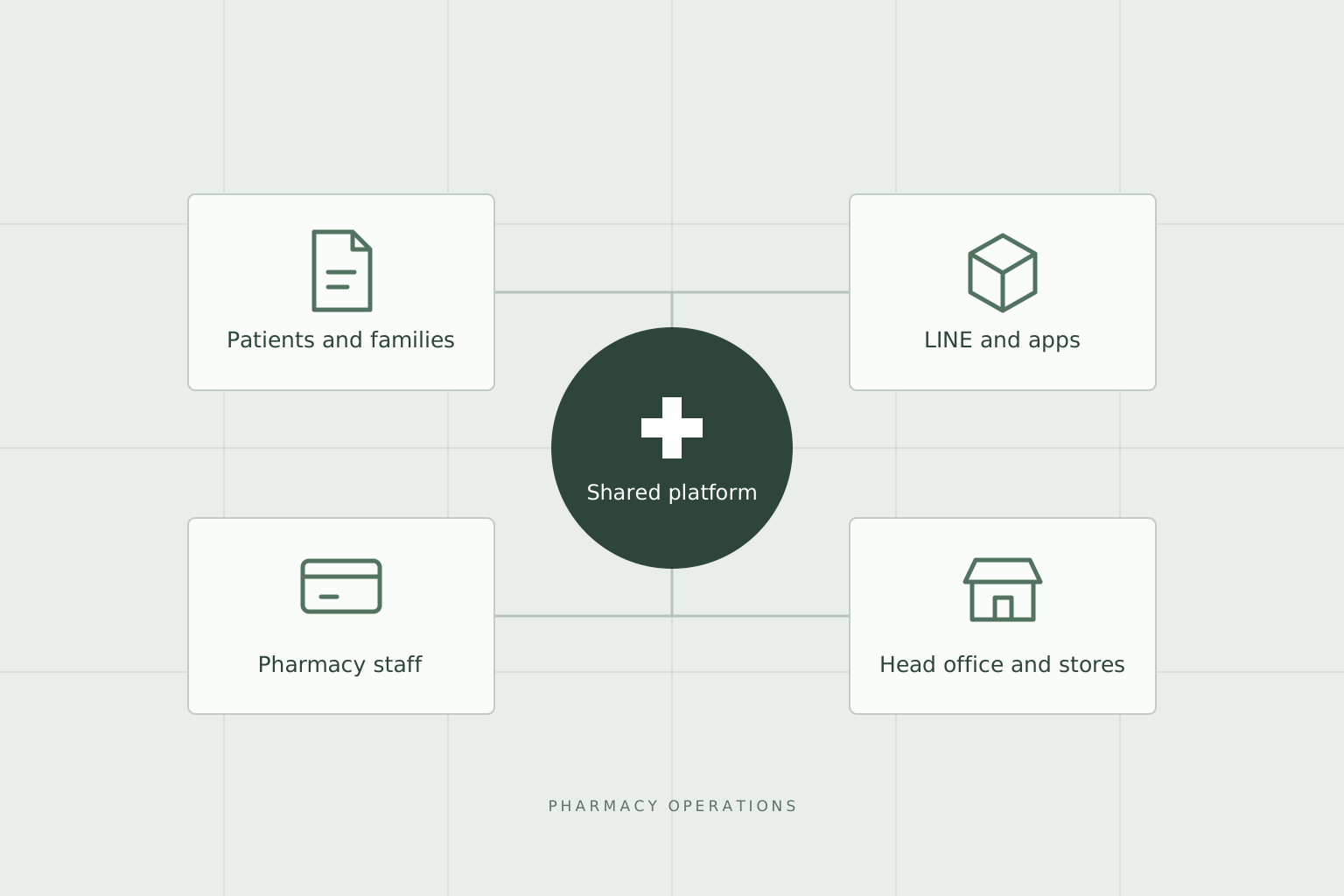
 Pharmacy service with patient app, LINE integration, pharmacy management, and headquarters management
Patients can make reservations, check their medicine records, and respond to follow-ups via LINE or the app, while pharmacies can manage reception status, patient information, and communication history through a management interface. Functions for managing store information, delivery, and payment settings are also provided on the headquarters side, connecting patient touchpoints with store and headquarters operations as a single service.